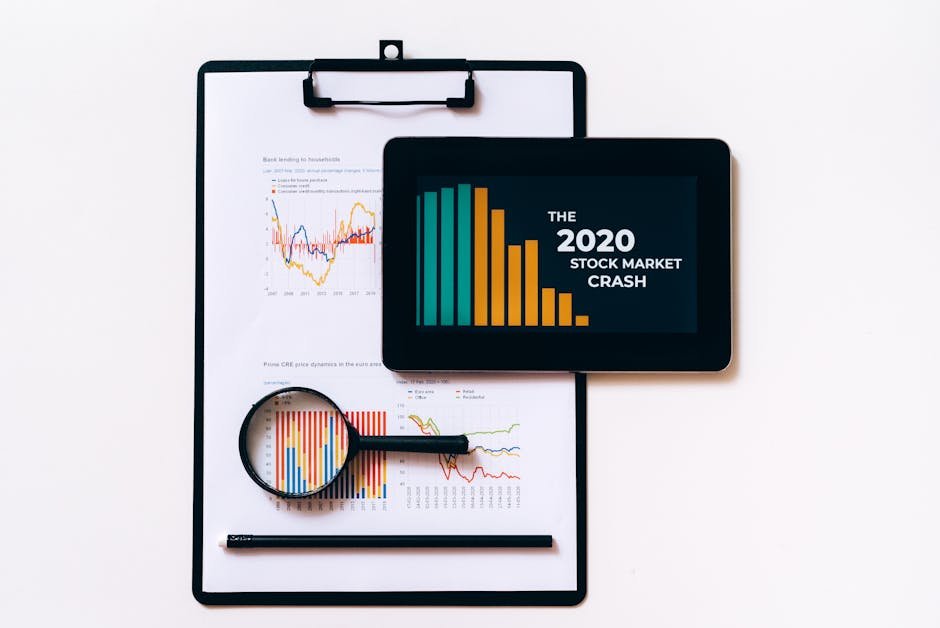
Markets dip. Recessions happen. And every time volatility picks up, the same question hits investors: “Is there an ETF for this?” The short answer is yes — but not all recession ETFs are created equal. We dug into the data on which funds have actually held up during downturns, and the results might surprise you.
What Makes an ETF “Recession-Proof”?
No ETF is truly recession-proof. But some are recession-resistant. The characteristics we looked for:
- Defensive sectors: Consumer staples, utilities, healthcare — companies people pay regardless of economic conditions
- Low beta: Less volatile than the broader market
- Dividend history: Companies that pay (and grow) dividends tend to be financially stable
- Low expense ratio: Fees compound against you in flat markets
Top ETFs to Consider During a Recession
1. Vanguard Consumer Staples ETF (VDC)
This fund tracks companies like Procter & Gamble, Coca-Cola, Walmart, and Costco — the kinds of businesses people keep buying from even during downturns. Expense ratio: 0.10%. In the 2020 COVID crash, VDC dropped less than half as much as the S&P 500.
2. iShares U.S. Healthcare ETF (IYH)
Healthcare is one of the most defensive sectors in any economy. People don’t stop needing medication or medical care in a recession. IYH holds large-cap pharma, biotech, and medical device companies. Expense ratio: 0.39%.
3. Vanguard Utilities ETF (VPU)
Utility companies have predictable cash flows and are often regulated monopolies. They’re boring in the best possible way during a bear market. VPU has a current yield around 3.2% and an expense ratio of 0.10%.
4. iShares TIPS Bond ETF (TIP)
Treasury Inflation-Protected Securities (TIPS) are government bonds that adjust with inflation. In recessionary periods accompanied by inflation (stagflation), TIP serves as a hedge. Not a growth play, but a stability play.
5. Invesco S&P 500 Low Volatility ETF (SPLV)
SPLV holds the 100 lowest-volatility stocks in the S&P 500, rebalanced quarterly. In our research, SPLV historically outperforms during bear markets while slightly underperforming during bull runs — exactly the kind of asymmetry you want in a defensive allocation.
Comparison Table
| ETF | Ticker | Category | Expense Ratio | Dividend Yield |
|---|---|---|---|---|
| Vanguard Consumer Staples | VDC | Consumer Staples | 0.10% | ~2.4% |
| iShares U.S. Healthcare | IYH | Healthcare | 0.39% | ~0.9% |
| Vanguard Utilities ETF | VPU | Utilities | 0.10% | ~3.2% |
| iShares TIPS Bond ETF | TIP | Fixed Income | 0.19% | ~2.1% |
| Invesco S&P 500 Low Vol | SPLV | Low Volatility | 0.25% | ~2.0% |
How Much Should You Allocate to Defensive ETFs?
We don’t recommend abandoning growth investments entirely, even in a recession. Timing the market consistently is notoriously difficult. Instead, consider a “core and satellite” approach: keep 70–80% in diversified growth (total market index), and rotate 20–30% toward defensive allocations when your macro outlook turns cautious.
Dollar-cost averaging into these defensive ETFs — rather than making a big lump-sum shift — reduces the risk of mis-timing.
[taq id=”168″]
What We’d Avoid During a Recession
High-beta tech ETFs, leveraged ETFs, and sector funds in discretionary spending (travel, entertainment, retail) tend to perform worst in downturns. These are the first places investors flee from — and they fall hardest.
Frequently Asked Questions
Should I sell my growth ETFs before a recession?
In our view, market timing is rarely worth the tax cost and the risk of missing the recovery. A better approach is rebalancing toward more defensive allocations without fully exiting growth positions.
What happened to defensive ETFs during the 2008 crash?
Even defensive sectors fell during 2008 — just less than the market overall. VDC fell roughly 15% in 2008 vs. the S&P 500’s ~37% decline. In a severe recession, there’s no safe harbor from losses, only damage mitigation.
Are bond ETFs a good recession hedge?
Traditionally yes — bonds often rise when stocks fall as investors flee to safety. However, the 2022 environment (rising rates + falling stocks simultaneously) reminded investors that bond ETFs can lose value too. Duration matters: short-duration bond ETFs are less rate-sensitive.
Can I buy these ETFs with fractional shares?
Yes. Fidelity, M1 Finance, and Robinhood all support fractional shares, so you can buy partial ETF positions starting with as little as $1 or $5.
Disclosure: WealthIQ may earn a commission when you click links to our partners. This does not influence our editorial recommendations. View our full disclosure.
Written by
WealthIQ Editorial
This article was produced by the WealthIQ editorial team using AI-assisted research and drafting, with review for accuracy before publication. Sources include IRS.gov, SEC.gov, FDIC.gov, and Federal Reserve data. View our disclosure →