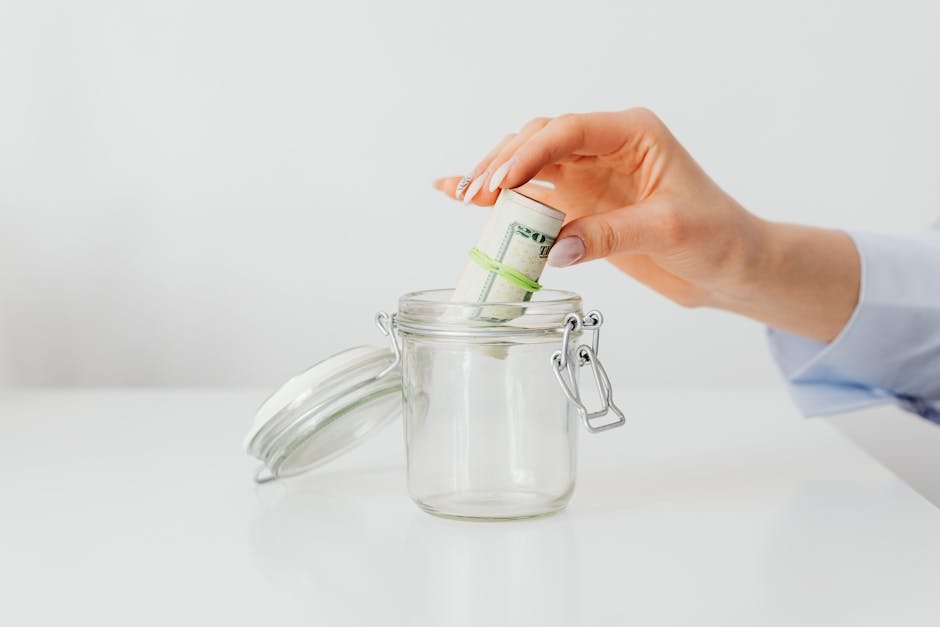
You don’t need to overhaul your entire life to save money fast. A few high-leverage changes can free up hundreds of dollars per month within weeks. Here’s what actually works — no fluff, no “skip your daily latte” nonsense.
The Fastest Ways to Save Money
1. Cut Your Two Biggest Expenses First
Most people try to optimize small things (subscriptions, groceries) while ignoring the elephant in the room: housing and transportation. These two categories consume 50-60% of most people’s budgets.
- Housing: Get a roommate, negotiate rent renewal, refinance your mortgage, or move to a cheaper area. A roommate alone can save $700-$1,500/month instantly.
- Car: Downgrade to a cheaper car, switch to a cheaper insurance plan, refinance your auto loan, or go car-free if possible. Switching car insurance alone can save $200-$600/year in 20 minutes.
2. Audit Every Subscription Right Now
Open your bank statement and highlight every recurring charge. Most people have 8-12 subscriptions they forgot about. Cancel anything you didn’t use last month. Common culprits:
- Streaming services you don’t use (Peacock, Paramount+, etc.)
- Gym memberships
- App subscriptions (news apps, cloud storage you don’t need)
- Old Amazon Subscribe & Save items
Typical savings: $50-$200/month.
3. Automate Your Savings (Seriously)
The fastest path to saving more is making it automatic. Set up a direct deposit split so a portion of every paycheck goes straight into a high-yield savings account before you can spend it. What you don’t see, you don’t spend.
Start with 10% of your take-home pay. If that’s impossible, start with 3%. Increase by 1% every month until it hurts, then back off slightly. You’ll be surprised how quickly you adapt.
4. Use a High-Yield Savings Account (HYSA)
If your emergency fund is sitting in a big-bank savings account earning 0.01%, you’re leaving hundreds of dollars per year on the table. HYSAs are currently paying 4-5%. Move it today.
Best HYSAs right now: Marcus by Goldman Sachs, Ally Bank, SoFi, Discover Savings.
5. Cook at Home More (The Math Is Wild)
The average American spends $3,000/year eating out. If you cook at home 5x/week instead of 3x/week, you can easily save $200-$400/month. Meal prep on Sundays and you’ll stop buying $15 lunches.
6. Negotiate Your Bills
Most people have never called their internet, phone, or cable provider to negotiate. Call them, say you’re thinking of canceling, and ask for their “retention offers.” Success rate is 70%+ if you’re polite. Typical savings: $20-$50/month per service.
7. Sell Stuff You Don’t Use
Do a 30-minute sweep of your home and list anything you haven’t used in 6 months on eBay, Facebook Marketplace, or Craigslist. Most people have $200-$1,000 worth of stuff they could sell today. This is immediate cash, not gradual savings.
8. Use the 48-Hour Rule for Non-Essential Purchases
Before buying anything over $50 that isn’t a planned expense, wait 48 hours. Most impulse purchases don’t survive 48 hours of thinking. This one habit can save you $200-$500/month without feeling like deprivation.
Monthly Savings Potential by Strategy
| Strategy | Estimated Monthly Savings | Effort Required |
|---|---|---|
| Get a roommate | $700-$1,500 | High (one-time) |
| Cancel unused subscriptions | $50-$200 | Low (one-time) |
| Automate savings (10%) | Depends on income | Low (set & forget) |
| Switch to HYSA | $15-$50/mo on $10K | Low (one-time) |
| Cook at home more | $200-$400 | Medium |
| Negotiate bills | $40-$150 | Low (one-time) |
| Sell unused items | $200-$1,000 (one-time) | Low |
| 48-hour rule | $100-$500 | Low (habit) |
The Fast-Track Savings Plan
If you want to save a meaningful amount within 30 days, here’s your action plan:
- Day 1: Open a HYSA and transfer your emergency fund there
- Day 2: Audit all subscriptions; cancel anything unused
- Day 3: Set up automated savings (10% of paycheck → HYSA)
- Day 7: Call insurance companies for better rates
- Day 14: Call internet/phone/cable and negotiate
- Day 30: Review what you saved and increase automation by 2%
What to Do With the Money You Save
Once you’ve built 3 months of expenses in your HYSA, start investing the rest. Every dollar sitting in savings above your emergency fund should be working harder for you in the market.
→ Best robo-advisors to automatically invest your savings
→ Use our FIRE calculator to see when your savings can work for you full-time
Start investing what you save with Betterment (no minimum) →
Frequently Asked Questions
How can I save $1,000 fast?
Sell unused items (aim for $200-400), cancel subscriptions ($50-100), pick up one extra shift or freelance gig ($200-400), and cut restaurant spending for 30 days ($100-300). That’s $1,000 in a month with focused effort.
How much of my paycheck should I save?
Financial rule of thumb is 20% (from the 50/30/20 budget). Realistically, start where you are and increase by 1% every month. Even saving 5% consistently beats most Americans who save nothing.
Is it better to save money or invest it?
Both, in sequence. Save 3-6 months of expenses in an HYSA first (emergency fund). Then invest everything above that in index funds. Saving protects you; investing grows you.
What’s the fastest way to save for a house down payment?
Automate savings into a dedicated HYSA (label it “House Fund”), cut your two largest discretionary expenses, and consider a second income stream (freelance, part-time, selling online). A $30K down payment saved over 2-3 years is achievable with focused effort.
Disclosure: WealthIQ may earn a commission when you click affiliate links. See our full disclosure policy.