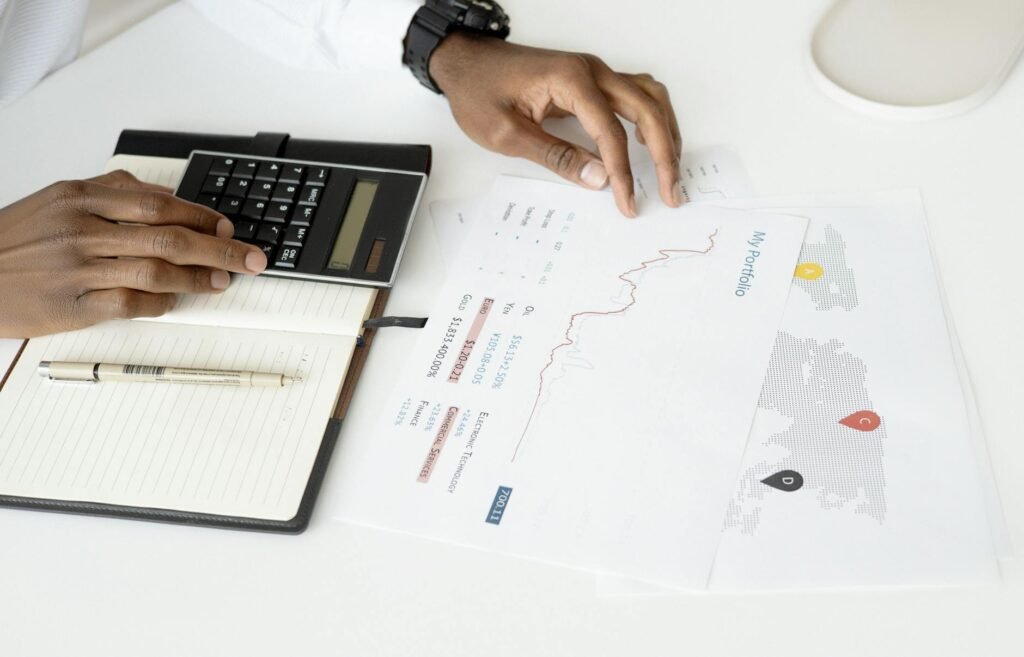
Markets don’t move in straight lines. Over time, your carefully constructed portfolio drifts away from its original allocation — stocks soar, bonds lag, and suddenly what started as a 70/30 split has become 85/15. That’s where portfolio rebalancing comes in.
Understanding portfolio rebalancing — what it is, why it matters, and how often to do it — is one of the most underrated skills in personal investing.
- Rebalancing restores your target asset allocation after market movements drift your portfolio off-course.
- Two main approaches: calendar rebalancing (fixed schedule) and threshold rebalancing (when drift exceeds 5%–10%).
- Rebalancing in tax-advantaged accounts (401k, IRA) avoids triggering capital gains taxes — always prefer this first.
- Most research suggests once-a-year rebalancing captures nearly all the benefit of more frequent rebalancing with far less effort.
Bottom line: Rebalancing isn’t about chasing returns — it’s about maintaining the risk level you chose. Do it annually, use tax-advantaged accounts first, and don’t overthink the frequency.
What Is Portfolio Rebalancing?
Portfolio rebalancing is the process of realigning the weightings of your assets back to your original target allocation. It involves selling assets that have grown beyond their target weight and buying assets that have fallen below theirs.
Example: You set a target allocation of 70% stocks / 30% bonds. After a strong bull market run, your portfolio is now 85% stocks / 15% bonds. To rebalance, you’d sell some of your stock positions and use the proceeds to buy bonds until you’re back at 70/30.
Why Does Rebalancing Matter?
Rebalancing serves two primary purposes:
1. Risk Management
Your target allocation reflects your personal risk tolerance — how much portfolio volatility you can stomach without panic-selling. When stocks outperform and take over a larger slice of your portfolio, your effective risk exposure is higher than you intended. A 40% drop in stocks hits harder when they represent 85% of your portfolio than when they’re 70%.
2. Enforcing Buy-Low, Sell-High Discipline
Rebalancing forces you to trim assets that have gotten expensive relative to your targets and add to assets that have become relatively cheaper. It’s a systematic way to avoid the emotional trap of chasing performance — adding more to whatever went up recently.
Research from Vanguard and other institutional investors has consistently shown that disciplined rebalancing reduces portfolio volatility and risk-adjusted returns over time, though it may modestly reduce raw total returns in long bull markets.
Rebalancing Methods: Calendar vs. Threshold
Calendar Rebalancing
You rebalance on a fixed schedule — monthly, quarterly, semi-annually, or annually — regardless of how much your allocation has drifted.
Pros:
- Simple and easy to automate
- Requires minimal monitoring
- Creates a consistent habit
Cons:
- May trigger unnecessary trades if drift is small
- Fixed schedule ignores market conditions
Best frequency: Most evidence points to annual rebalancing as the sweet spot. More frequent rebalancing (monthly, quarterly) adds transaction costs and tax drag without proportionally improving outcomes.
Threshold (Bands) Rebalancing
You only rebalance when an asset class drifts beyond a predefined band — commonly 5% absolute drift or 20%–25% relative drift from target.
Example: Your 70% stock target has 5% bands set. You only rebalance when stocks hit below 65% or above 75%.
Pros:
- Only rebalances when truly needed
- Captures more upside in trending markets
- Fewer unnecessary transactions
Cons:
- Requires regular monitoring to check thresholds
- More complex to implement manually
Hybrid Approach
Many investors combine both: check quarterly, but only rebalance if allocation has drifted beyond 5%–10%. This captures the best of both methods.
Rebalancing Strategies
Sell High, Buy Low (Traditional)
Sell overweighted assets and buy underweighted assets. Simple, but triggers capital gains taxes in taxable accounts.
Direct New Contributions
Instead of selling, direct new contributions (401k contributions, dividends, cash additions) toward underweighted asset classes. This avoids triggering taxable events and is ideal when you’re still in accumulation phase.
Dividend Reinvestment Routing
Set dividends from overweighted assets to be reinvested into underweighted ones, or moved to a settlement fund for manual reallocation.
Tax Implications of Rebalancing
This is where many investors go wrong. Rebalancing in a taxable brokerage account by selling appreciated assets triggers capital gains taxes — either short-term (taxed as ordinary income) or long-term (0%, 15%, or 20% depending on your income).
Tax-Smart Rebalancing Order
- Rebalance inside tax-advantaged accounts first (401k, IRA, HSA) — no capital gains consequences
- Use new contributions to rebalance taxable accounts before selling anything
- Harvest tax losses when selling in taxable accounts — pair rebalancing with tax-loss harvesting where possible
- Donate appreciated assets to charity instead of selling them (if charitably inclined)
If all your investable assets are in 401(k)s and IRAs, you can rebalance as frequently as you like without any tax consequences. Take advantage of that.
How Often Should You Actually Rebalance?
The research is fairly consistent here. A 2010 Vanguard study and subsequent analyses found that:
- Annual rebalancing captures virtually all the risk-reduction benefit
- More frequent rebalancing (monthly) adds negligible benefit and increases costs
- Threshold-based rebalancing (5% bands) performs comparably to annual in most market environments
- Never rebalancing leads to significantly higher portfolio risk over 10–20 year periods
Our recommendation for most investors: Rebalance once per year, ideally in January (easy to remember, aligns with new contribution deadlines) or whenever making significant new contributions. If you’re using a robo-advisor, rebalancing is typically automated for you.
Rebalancing Tools
You don’t have to do this manually. Several tools and platforms make rebalancing easier:
- Robo-advisors (Betterment, Wealthfront): Automatic threshold rebalancing included
- Vanguard Personal Advisor Services: Annual rebalancing with advisor oversight
- Portfolio Visualizer (free): Test rebalancing strategies historically before committing
- Personal Capital / Empower: Free portfolio tracking that flags allocation drift
- Target-date funds: Automatic rebalancing built in — ideal for “set it and forget it” investors
The Bottom Line
Portfolio rebalancing is one of the few free lunches in investing — it reduces risk, enforces discipline, and keeps your portfolio aligned with your actual goals. The best strategy isn’t the one with the most sophisticated trigger system; it’s the one you’ll actually execute consistently.
Set a calendar reminder for once a year. Check your allocation. If you’re off by more than 5–10%, rebalance in your tax-advantaged accounts first. Done.
Disclosure: This article may contain affiliate links. We may earn a commission if you click through and make a purchase, at no additional cost to you. All opinions are our own. See our Editorial Policy for details.